Franklin Fastener
  • Competencies
    • Metal Stamping
    • Fourslide Stamping
    • Wire Forming
    • Welding and Assembly
    • Product Finishing
  • Engineering
    • Rapid Prototyping
    • Design
    • Tooling
  • Products
    • Custom Products
    • Plain and Coated Clamps
    • Frame and J-Clips
    • Cushioned Clamps
    • Engineered Solutions
  • Industries
    • Automotive
    • Heavy Truck
    • Engines
    • Military
  • Resources
    • Testimonials
    • FAQ
    • Blog
  • About
    • Accreditations
    • Areas We Serve
    • Supplier Requirements
  • Contact
  • Menu Menu
  • Link to LinkedIn
  • Link to Facebook

How to Choose the Right Clip or Clamp Industrial Fasteners for Your Application

It’s easy to underestimate just how much a clip or clamp can impact a finished product—until something shifts, shakes, or snaps. In most engineered systems, industrial fasteners are responsible for the structural integrity of the whole. They secure wiring, brace tubing, anchor panels, and manage everything from vibration to heat expansion.

These components may be small, but their influence is anything but. Choosing the right clip or clamp is a matter of performance, reliability, and long-term value. Whether you’re designing a system from the ground up or sourcing replacements for high-volume production, getting your fastener selection right can make or break your assembly process.

The Range of Clip and Clamp Industrial Fasteners on the Market

Before diving into how to choose the best option, it helps to understand what’s out there. Today’s industrial fasteners go far beyond a one-size-fits-all bracket or band. Here are some of the most commonly used categories in modern manufacturing:

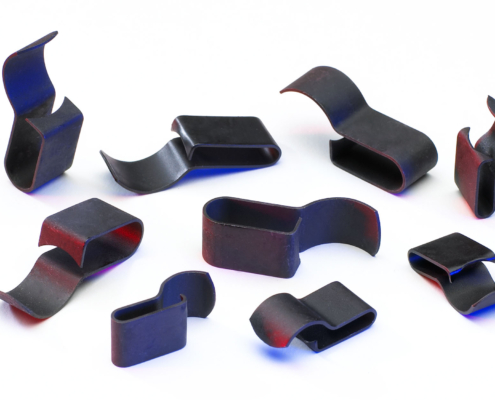
Spring Clips

Also known as tension clips, these are designed to apply consistent force to secure cables, tubes, or panels. They’re ideal when space is tight and easy removal is required.

Panel Clips

Used to attach trim, panels, or covers, panel clips often feature snap-fit or push-in functionality. They’re designed for repeat engagement and minimal visual impact.

P-Clamps (Cushioned or Uncushioned)

Shaped like the letter “P,” these fasteners secure cables or tubing to a surface. Cushioned versions protect against abrasion and vibration.

Hose Clamps

These are adjustable bands, typically metal or reinforced polymer, used to hold hoses onto fittings. They require secure torque and environmental resistance.

J-Clips and U-Clips

Often used in automotive and aerospace applications, these fasteners slide over edges to provide threaded or pressure-fit retention points.

Wire Clips and Routing Fasteners

These are essential for managing wiring in confined assemblies, especially when movement, heat, or EMI shielding are concerns.
How to Select the Right Clip or Clamp Fastener

The perfect fastener is the one that holds while performing reliably in the exact conditions of its application. Every decision should be based on performance requirements, environmental stressors, and assembly demands.

Think About Material Composition

The material you choose dictates corrosion resistance, weight, fatigue strength, and cost. Here’s a quick breakdown:

  • Stainless Steel: Stainless still has excellent corrosion resistance and high strength, ideal for marine, medical, and food-grade applications.
  • Carbon Steel (Zinc-Plated or Coated): Budget-friendly and strong; carbon coatings improve environmental resistance.
  • Aluminum: This material is lightweight and corrosion-resistant but less strong under high loads.
  • Plastic/Polymer: Ideal for reducing weight or avoiding galvanic corrosion; polymer is often used in electronics or consumer goods.

Choosing the right material is the foundation of a fastener that performs reliably under real-world conditions.

Consider Environmental Conditions

Will the component be exposed to saltwater? Heat cycling? Vibration? UV exposure? Fasteners in aerospace or automotive under-hood applications, for instance, must handle extreme temperature swings and vibration fatigue without loosening or cracking.

Evaluate Load-Bearing Requirements

How much force will the clip or clamp endure—static and dynamic? Overlooking this can lead to fatigue, stress fractures, or outright failure. Spring clips should maintain constant pressure over time, while panel clips should resist disengagement without damaging adjacent components.

Don’t Forget About Vibration and Movement

In applications like heavy equipment or aircraft interiors, vibration isn’t a given. Fasteners must absorb, isolate, or accommodate that motion without transmitting damaging resonance to surrounding systems.

Prioritize Ease of Installation and Service

Does the clip need to be installed at speed? Removed repeatedly for maintenance? In many industries, labor time is just as important as part cost. Fasteners designed for tool-less engagement or repeatable assembly improve throughput and minimize operator error.

Understand Aesthetic and Clearance Requirements

Especially relevant in automotive interiors or consumer electronics, some clips need to be visually discreet, color-matched, or hidden within trim profiles. Others need to remain accessible yet unobtrusive.

Industrial Applications and How Needs Vary

Different industries push industrial fasteners in different directions. One clamp might thrive in a refrigerated medical device but fail in an off-road utility vehicle. Knowing the typical demands of your industry can help narrow the field quickly. Common industries include:

Automotive

From cable routing to body panel retention, automotive fasteners must survive vibration, heat, road grime, and corrosive environments. They also need to be compact and cost-effective for high-volume production.

Aerospace

Weight savings and performance under vibration are paramount. Fasteners often require aerospace-grade materials, special coatings, or multi-function designs (such as shielding, grounding, or vibration isolation).

Healthcare

When it comes to medical devices, hygiene and biocompatibility are everything. Stainless steel or polymer clips that withstand autoclaving or sterilization are often used. The component finish

must be smooth and crevice-free to prevent contamination.

Industrial Equipment

Heavy-duty clamps are used to secure hydraulic lines, electrical conduits, or cabling in rugged conditions. Strength and abrasion resistance are top priorities here.

Electronics

Small-scale routing fasteners help manage complex wiring systems. These fasteners must be non-conductive, EMI-safe, and easy to install in tight assemblies.

Are you searching for the most suitable way to fasten your project? Discover the pros and cons of different fastening methods and explore alternative options with Franklin Fastener.

Keep Reading

The Risks of Choosing the Wrong Fastener

Using a fastener that wasn’t built for the environment or load it’s exposed to can result in failure over time, or even sooner. Here’s where things often go wrong:

  • Corrosion: A zinc-plated steel clamp used in a high-moisture environment will degrade quickly, potentially leading to component movement or electrical shorts.
  • Creep or Deformation: Plastic clips in high-heat applications can warp, losing retention force or cracking.
  • Stress Fractures: Inadequate load capacity or poor material selection can lead to fatigue failures under dynamic load conditions.
  • Assembly Issues: Fasteners that are difficult to install slow production and increase the risk of misalignment or tool damage.
  • Vibration Loosening: If the fastener lacks built-in isolation or tension retention, it can loosen over time, compromising entire assemblies.

The solution? Don’t compromise. Design or source your industrial fasteners for the realities of the application and not just for what’s in stock.

A Step-by-Step Guide to Choosing the Right Clip or Clamp

Here’s a practical framework engineers and buyers can use to identify the best fastener for the job:

Step 1: Define the Application

Start with the basics:

  • What is the clip or clamp securing?
  • What’s the load (static/dynamic)?
  • Where will it be installed (inside, outside, high-heat area, moving assembly)?

Understanding what the fastener needs to do—and where it needs to do it—is the first step toward selecting a solution that won’t let you down in the field.

Step 2: Identify Environmental Conditions

Consider:

  • Temperature range
  • Exposure to chemicals or fluids
  • UV or weather exposure
  • Vibration or shock

The conditions your fastener faces will determine whether it survives the long haul or fails prematurely—so plan for the worst, not the ideal.

Step 3: Specify Performance Requirements

Determine:

  • Required holding strength or torque
  • Reusability or one-time use
  • Safety-critical status (is failure catastrophic?)

When the stakes are high, clarity on performance expectations ensures your fastener functions as intended, not just on paper, but in practice.

Step 4: Select Materials and Finish

Match materials to environment and budget. For example:

  • Stainless for corrosion resistance
  • Carbon steel with plating for economy
  • Plastic for weight or electrical isolation

Material selection isn’t just about fit—it’s about ensuring your clip or clamp stands up to its working environment without compromise.

Step 5: Consider Assembly Process

Think about:

  • Assembly line efficiency
  • Tool requirements
  • Accessibility for future maintenance

A fastener that’s hard to install or service can slow down production and drive up costs—ease of use is as important as function.

Step 6: Request Samples or Prototypes

If you’re unsure, test before committing to volume. Real-world performance trumps assumptions every time.

Step 7: Reassess with a Manufacturing Partner

Lean on your supplier. A partner experienced in industrial fasteners can flag compatibility issues, suggest enhancements, or even design custom parts to fit your system better.

Let Performance Drive the Purchase—Not Just Price

Too many procurement decisions are made based on the lowest unit cost. But when it comes to fasteners, those savings can evaporate quickly due to warranty claims, field repairs, or production slowdowns.

A properly selected clip or clamp:

  • Protects critical systems
  • Speeds up assembly
  • Improves serviceability
  • Extends product life

That’s value beyond the sticker price.

Choose Metal Materials That Are Built to Perform and Engineered to Last

At Franklin Fastener, we know fasteners are performance components. That’s why we take pride in offering precisely engineered industrial fasteners built for real-world applications. Whether you’re outfitting a fleet of trucks, building next-gen aerospace systems, or wiring industrial machinery, we bring decades of expertise to the table.

We manufacture clips and clamps in a wide range of materials, finishes, and geometries—and we back it all with in-house tooling and responsive support. When you need a fastening solution that works under pressure, works over time, and works right, we’re here to help.

Let’s talk about your application. Our team can walk you through options, review design specs, or create something custom to meet your exact requirements.

Share This Post

  • Share on Facebook
  • Share on X
  • Share on WhatsApp
  • Share on Pinterest
  • Share on LinkedIn
  • Share on Tumblr
  • Share on Vk
  • Share on Reddit
  • Share by Mail

More Like This

How the Right Fastening Solutions Reduce Production Costs

Products
https://franklinfastener.com/wp-content/uploads/2025/04/How-the-Right-Fastening-Solutions-Reduce-Production-Costs.jpg 1250 2000 Abstrakt Marketing /wp-content/uploads/2022/12/fastener-logo1-01.png Abstrakt Marketing2025-04-25 11:01:232026-05-17 10:50:15How the Right Fastening Solutions Reduce Production Costs

The Hidden Engineering Between Industrial Clips and Clamps

Products
https://franklinfastener.com/wp-content/uploads/2023/01/Frameclip-group.jpg 1250 2000 Abstrakt Marketing /wp-content/uploads/2022/12/fastener-logo1-01.png Abstrakt Marketing2025-04-23 14:24:262026-05-17 10:50:15The Hidden Engineering Between Industrial Clips and Clamps
Metal Stamping Machine

Common metal stamping defects and how to avoid them

Products
https://franklinfastener.com/wp-content/uploads/2023/10/Metal-Stamping-Machine.jpg 1250 2000 Abstrakt Marketing /wp-content/uploads/2022/12/fastener-logo1-01.png Abstrakt Marketing2023-10-17 09:00:002026-05-17 10:50:18Common metal stamping defects and how to avoid them
Side view of the engine with a special tool installed to adjust the valve clearance

How to Improve Productivity in Manufacturing

Products
https://franklinfastener.com/wp-content/uploads/2023/01/Side-view-of-the-engine-with-a-special-tool-installed-to-adjust-the-valve-clearance.jpg 1250 2000 Abstrakt Marketing /wp-content/uploads/2022/12/fastener-logo1-01.png Abstrakt Marketing2023-07-10 09:00:002026-05-17 10:50:18How to Improve Productivity in Manufacturing
Previous Previous Previous Next Next Next

Categories

  • Clamps
  • Competencies
  • Custom Products
  • Engineering
  • Fastening
  • Heavy Truck
  • Metal Stamping
  • Products
  • Uncategorized
  • Welding and Assembly
  • Wire Forming

Contact Us

"*" indicates required fields

This field is for validation purposes and should be left unchanged.

About Us

Franklin Fastener is an industry-leading provider of engineered metal products. From concept to completion, our experts provide our clients with the highest service levels.

What We Do

Competencies

Engineering

Products

Industries

Documentation

Terms of Sale

Terms of Purchase

Catalog

Supplier Requirements

Contact Us

12701 Beech Daly, Redford Charter Twp, MI 48239

313-537-8900

websales@franklinfastener.com

Accreditations

Website by Abstrakt Marketing Group © 2023
  • Sitemap
  • Privacy Policy
Link to: How the Right Fastening Solutions Reduce Production Costs Link to: How the Right Fastening Solutions Reduce Production Costs How the Right Fastening Solutions Reduce Production Costs Link to: Ergo-Clamp: A Revolutionary Two-Piece Clamp Solution Link to: Ergo-Clamp: A Revolutionary Two-Piece Clamp Solution Ergo-Clamp™ product_Ergo-Clamp: A Revolutionary Two-Piece Clamp Solution
Scroll to top Scroll to top Scroll to top

This site uses cookies. By continuing to browse the site, you are agreeing to our use of cookies.

AcceptLearn more

Cookie and Privacy Settings


How we use cookies

We may request cookies to be set on your device. We use cookies to let us know when you visit our websites, how you interact with us, to enrich your user experience, and to customize your relationship with our website.

Click on the different category headings to find out more. You can also change some of your preferences. Note that blocking some types of cookies may impact your experience on our websites and the services we are able to offer.

Essential Website Cookies

These cookies are strictly necessary to provide you with services available through our website and to use some of its features.

Because these cookies are strictly necessary to deliver the website, refusing them will have impact how our site functions. You always can block or delete cookies by changing your browser settings and force blocking all cookies on this website. But this will always prompt you to accept/refuse cookies when revisiting our site.

We fully respect if you want to refuse cookies but to avoid asking you again and again kindly allow us to store a cookie for that. You are free to opt out any time or opt in for other cookies to get a better experience. If you refuse cookies we will remove all set cookies in our domain.

We provide you with a list of stored cookies on your computer in our domain so you can check what we stored. Due to security reasons we are not able to show or modify cookies from other domains. You can check these in your browser security settings.

Other external services

We also use different external services like Google Webfonts, Google Maps, and external Video providers. Since these providers may collect personal data like your IP address we allow you to block them here. Please be aware that this might heavily reduce the functionality and appearance of our site. Changes will take effect once you reload the page.

Google Webfont Settings:

Google Map Settings:

Google reCaptcha Settings:

Vimeo and Youtube video embeds:

Accept settingsHide notification only