Franklin Fastener
  • Competencies
    • Metal Stamping
    • Fourslide Stamping
    • Wire Forming
    • Welding and Assembly
    • Product Finishing
  • Engineering
    • Rapid Prototyping
    • Design
    • Tooling
  • Products
    • Custom Products
    • Plain and Coated Clamps
    • Frame and J-Clips
    • Cushioned Clamps
    • Engineered Solutions
  • Industries
    • Automotive
    • Heavy Truck
    • Engines
    • Military
  • Resources
    • Testimonials
    • FAQ
    • Blog
  • About
    • Accreditations
    • Areas We Serve
    • Supplier Requirements
  • Contact
  • Menu Menu
  • Link to LinkedIn
  • Link to Facebook

Improve Component Performance With These Metal Polishing Techniques

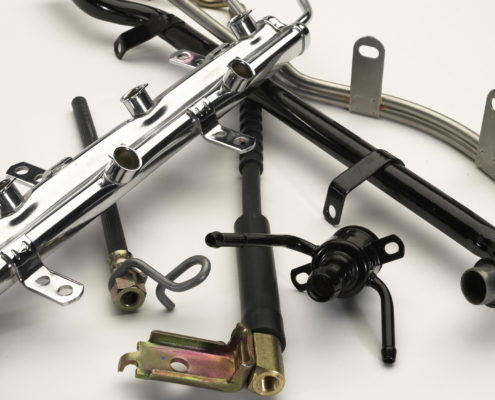
When it comes to metal components, appearance and functionality go hand in hand. Whether you’re designing a luxury automobile, crafting intricate jewelry, or manufacturing precision medical instruments, the quality of metal finishing can make or break your product. Metal polishing techniques not only enhance the aesthetics of a product but also improve its durability, corrosion resistance, and overall performance. In this blog, we’ll review common metal finishing techniques.
Why Is Metal Finishing Important?

Metal finishing techniques are important for the following reasons:

  • Enhancing aesthetics: A well-finished metal surface reflects light evenly, creating an appealing, visually captivating, mirror-like finish. This is essential in various industries, from automotive to jewelry.
  • Improving corrosion resistance: Metal surfaces can be vulnerable to corrosion and rust. Metal finishing techniques create protective barriers against environmental factors, ensuring the product’s longevity.
  • Improving cleanability: Polished surfaces are easier to clean, making them ideal for applications where hygiene is critical, such as medical instruments.
  • Reducing friction: In some cases, metal finishing can reduce friction, which is vital for moving parts in machinery.

Heat Treating

Heat treating is a fundamental metal finishing technique that involves subjecting metal components to controlled heating and cooling processes. The goal is to alter the material’s microstructure, enhancing its mechanical properties. Common heat-treating methods include:

  • Annealing: This process involves heating the metal to a specific temperature and then slowly cooling it. It relieves internal stresses, improves flexibility, and refines grain structure.
  • Quenching: Metal components are rapidly cooled after heating, creating a hardened surface. This process enhances strength but may reduce ductility.
  • Tempering: After quenching, tempering involves reheating the metal to a lower temperature, balancing hardness and toughness.

Plating

Metal plating is a widely used finishing technique that involves depositing a thin layer of metal onto the surface of a substrate. This can serve various purposes, including corrosion resistance, improved conductivity, and aesthetic appeal.

  • Electroplating: In this method, an electric current deposits metal ions onto the substrate. Common metals for electroplating include nickel, chromium, and gold.
  • Hot-dip galvanizing: This process involves immersing the metal component in a bath of molten zinc, forming a protective layer against corrosion.

Painting

Painting is a versatile metal finishing technique for aesthetic and protective purposes. The paint application creates a barrier that shields the metal from environmental elements, preventing corrosion and enhancing the component’s lifespan.

  • Powder coating: Finely ground particles of pigment and resin are electrostatically charged and sprayed onto the metal surface. The coated component is then heated, allowing the powder to melt and form a durable finish.
  • Liquid painting: Traditional liquid painting involves applying a liquid coating, which forms a protective layer upon drying. This method offers a wide range of color options.

Overmolding

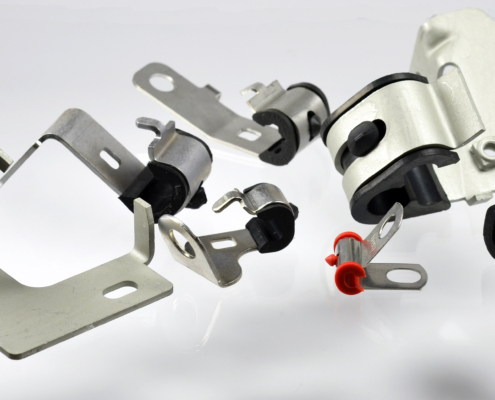
Overmolding is a technique where a metal component is covered with a layer of plastic or rubber. This process enhances the aesthetics and adds functional benefits, such as improved grip and impact resistance.

Coating

Metal coatings are applied to improve the surface properties of components, providing benefits such as increased hardness, wear resistance, and reduced friction.

  • Physical vapor deposition (PVD): This process involves the deposition of thin films through the condensation of vaporized materials. Common PVD coatings include titanium nitride (TiN) and chromium nitride (CrN).
  • Chemical vapor deposition (CVD): In CVD, a chemical reaction forms a thin layer on the metal surface. This method is often used for enhanced hardness coatings like diamond-like carbon (DLC).

Passivation

Passivation is a chemical process that improves the corrosion resistance of stainless steel and other corrosion-resistant alloys. This technique removes free iron and other contaminants from the metal surface, promoting the formation of a protective oxide layer.

  • Citric acid passivation: This environmentally friendly method uses citric acid to remove impurities and enhance the corrosion resistance of stainless steel.
  • Nitric acid passivation: Traditionally, nitric acid has been used for passivation, but its environmental impact has led to the exploration of alternative methods like citric acid passivation.

Metal Polishing Techniques for Any Component

From standard parts to custom-built components, Franklin Fastener has finishing solutions that help increase your equipment’s durability. Learn more about the elements we polish.Button: Our Parts

Our Parts

Choosing the Right Polishing Method

Selecting the appropriate polishing method depends on several factors, including the type of metal, the desired finish, and the application. Here are some key considerations to keep in mind when choosing a metal polishing technique:

  • Metal type: Different metals may require different polishing techniques due to variations in hardness, composition, and reactivity. For example, stainless steel and aluminum may require other methods.
  • Finish requirements: Consider the level of polish required. A decorative jewelry piece may require a higher gloss level than a mechanical component, where functionality is paramount.
  • Complexity: Some components have intricate details or hard-to-reach areas, making vibratory or ultrasonic polishing more suitable.
  • Cost and efficiency: Assess the budget and time constraints. While some techniques may offer exceptional results, they can be costly and time-consuming.
  • Environmental impact: Some methods involve using chemicals or generating significant waste. Consider the environmental impact when choosing a polishing technique.

Common Challenges in Metal Polishing

Polishing metal surfaces is a skilled art that comes with its set of challenges. Understanding these challenges and how to address them is crucial for achieving the best results. Here are some common issues in metal polishing and how to overcome them:

Scratches and Swirl Marks

One of the most common problems in metal polishing is the appearance of scratches and swirl marks on the surface. This can occur if the abrasive material is too coarse or if the polishing process is not done meticulously.

To prevent scratches and swirl marks, start with coarser abrasives and progressively move to finer ones. Additionally, make sure to clean the surface thoroughly between each step to remove any residue or abrasive particles that could cause scratching.

Uneven Finish

Uneven polishing can result from improper technique or pressure during the polishing process. To achieve an even finish, maintain consistent pressure and use controlled, uniform movements when polishing. Take your time and pay attention to detail.

Over-Polishing

Over-polishing can lead to a loss of material, which is especially critical when working with precision components. To avoid this issue, monitor the polishing process carefully and stop when the desired finish is achieved. Use the finest abrasive necessary to save material and maintain dimensional accuracy.

Chemical Residue

In chemical polishing, improper rinsing or cleaning of the metal component can lead to chemical residue, affecting the final finish. Ensure thorough rinsing and cleaning to remove all traces of the chemical solution.

Safety Concerns

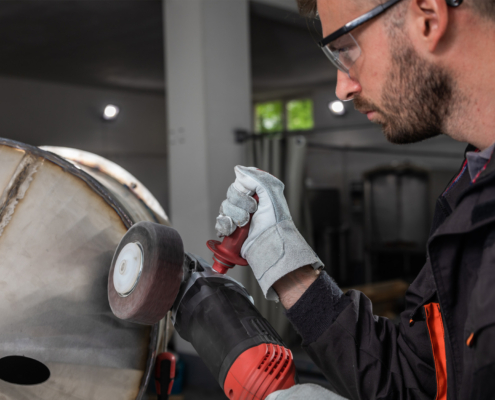
Safety is paramount when working with metal polishing compounds, especially in industrial settings. Wear appropriate protective gear, such as safety goggles, gloves, and respiratory protection, depending on the polishing method and materials used.

Minimize Wear and Tear With Franklin Fastener’s Metal Polishing Services

Precisely built components are vital for maintaining the operational efficiency of equipment. Franklin Fastener offers industry-leading product finishing solutions for  the following parts:

  • Plan and coated clamps
  • Frame and j-clips
  • Cushioned clamps
  • Custom products
  • Engineered solutions

We leverage our knowledge and experience to deliver complete components that meet your specifications. Contact us today to learn more about our finishing solutions.

Share This Post

  • Share on Facebook
  • Share on X
  • Share on WhatsApp
  • Share on Pinterest
  • Share on LinkedIn
  • Share on Tumblr
  • Share on Vk
  • Share on Reddit
  • Share by Mail

More Like This

Clamp and Clip Failures: What Fastener Procurement Teams Overlook During Sourcing

Clamps, Fastening
Fastener procurement mistakes can lead to downtime and recalls. Learn what sourcing teams often miss when specifying clamps and clips for production.
August 12, 2025
https://franklinfastener.com/wp-content/uploads/2025/08/applications007-2.jpg 1250 2000 Abstrakt Marketing /wp-content/uploads/2022/12/fastener-logo1-01.png Abstrakt Marketing2025-08-12 11:23:312026-05-16 10:49:52Clamp and Clip Failures: What Fastener Procurement Teams Overlook During Sourcing

The Iso-Cush System: A Cushioned Clamp Designed for Noise Reduction and Durability

Metal Stamping
Franklin Fastener's Iso-Cush System provides an innovative cushioned clamp solution for heavy-duty industry applications.
June 18, 2025
https://franklinfastener.com/wp-content/uploads/2025/06/Grommet-Assy_706-2-scaled.jpg 1236 2560 Abstrakt Marketing /wp-content/uploads/2022/12/fastener-logo1-01.png Abstrakt Marketing2025-06-18 12:48:412026-05-16 10:49:52The Iso-Cush System: A Cushioned Clamp Designed for Noise Reduction and Durability
Ergo-Clamp™ product_

Ergo-Clamp: A Revolutionary Two-Piece Clamp Solution

Metal Stamping
Franklin Fastener's two-piece clamp, the Ergo-Clamp, revolutionizes maintenance for heavy-duty industries like automotive and diesel.
June 13, 2025
https://franklinfastener.com/wp-content/uploads/2023/01/Ergo-Clamp™-product_.jpg 1250 2000 Abstrakt Marketing /wp-content/uploads/2022/12/fastener-logo1-01.png Abstrakt Marketing2025-06-13 10:05:282026-05-16 10:49:52Ergo-Clamp: A Revolutionary Two-Piece Clamp Solution

Four-Slide Machine Stamping Process

Metal Stamping
Learn about the process used by four-slide machines and the industries that benefit from this technique.
January 24, 2024
https://franklinfastener.com/wp-content/uploads/2024/01/fourslide004-2.jpg 1250 2000 Abstrakt Marketing /wp-content/uploads/2022/12/fastener-logo1-01.png Abstrakt Marketing2024-01-24 14:19:452026-05-16 10:49:53Four-Slide Machine Stamping Process

Improve Component Performance With These Metal Polishing Techniques

Metal Stamping
Learn common metal polishing techniques and tips for finding the right one for your component.
January 23, 2024
https://franklinfastener.com/wp-content/uploads/2024/01/Improve-Component-Performance-With-These-Metal-Polishing-Techniques.jpg 1250 2000 Abstrakt Marketing /wp-content/uploads/2022/12/fastener-logo1-01.png Abstrakt Marketing2024-01-23 16:11:442026-05-16 10:49:53Improve Component Performance With These Metal Polishing Techniques
Industrial press for sheet metal stamping

Overcoming Common Challenges in Metal Stamping: Solutions and Best Practices

Metal Stamping
Learn about the common challenges you may encounter during precise metal stamping solutions and tips for overcoming them.
November 14, 2023
https://franklinfastener.com/wp-content/uploads/2023/11/Industrial-press-for-sheet-metal-stamping.jpg 1250 2000 Abstrakt Marketing /wp-content/uploads/2022/12/fastener-logo1-01.png Abstrakt Marketing2023-11-14 09:00:002026-05-16 10:49:53Overcoming Common Challenges in Metal Stamping: Solutions and Best Practices

The Role of Precision in Metal Stamping: Achieving Tolerances and Consistency

Metal Stamping
Learn about the importance of precision in metal stamping processes and the challenges many companies face.
November 10, 2023
https://franklinfastener.com/wp-content/uploads/2023/11/The-Role-of-Precision-in-Metal-Stamping-Processes.jpg 1250 2000 Abstrakt Marketing /wp-content/uploads/2022/12/fastener-logo1-01.png Abstrakt Marketing2023-11-10 09:00:002026-05-16 10:49:54The Role of Precision in Metal Stamping: Achieving Tolerances and Consistency

How Production Metal Stamping Enhances Development

Metal Stamping
Learn how production metal stamping enhances manufacturing processes and the solutions offered by Franklin Fastener.
November 2, 2023
https://franklinfastener.com/wp-content/uploads/2023/10/Production-Metal-Stamping-Services.jpg 1250 2000 Abstrakt Marketing /wp-content/uploads/2022/12/fastener-logo1-01.png Abstrakt Marketing2023-11-02 09:00:002026-05-16 10:49:54How Production Metal Stamping Enhances Development

The Importance of Fasteners and Clamps on Product Assembly

Fastening
Learn about the role of metal clip fasteners and clamps in product assembly and the industry-leading options offered by Franklin Fastener.
October 26, 2023
https://franklinfastener.com/wp-content/uploads/2023/10/The-Importance-of-Fasteners-and-Clamps-on-Product-Assembly.jpg 1250 2000 Abstrakt Marketing /wp-content/uploads/2022/12/fastener-logo1-01.png Abstrakt Marketing2023-10-26 09:00:002026-05-16 10:49:55The Importance of Fasteners and Clamps on Product Assembly
Previous Previous Previous Next Next Next

Categories

  • Clamps
  • Competencies
  • Custom Products
  • Engineering
  • Fastening
  • Heavy Truck
  • Metal Stamping
  • Products
  • Uncategorized
  • Welding and Assembly
  • Wire Forming

Contact Us

"*" indicates required fields

This field is for validation purposes and should be left unchanged.

About Us

Franklin Fastener is an industry-leading provider of engineered metal products. From concept to completion, our experts provide our clients with the highest service levels.

What We Do

Competencies

Engineering

Products

Industries

Documentation

Terms of Sale

Terms of Purchase

Catalog

Supplier Requirements

Contact Us

12701 Beech Daly, Redford Charter Twp, MI 48239

313-537-8900

websales@franklinfastener.com

Accreditations

Website by Abstrakt Marketing Group © 2023
  • Sitemap
  • Privacy Policy
Link to: Overcoming Common Challenges in Metal Stamping: Solutions and Best Practices Link to: Overcoming Common Challenges in Metal Stamping: Solutions and Best Practices Overcoming Common Challenges in Metal Stamping: Solutions and Best Practice...Industrial press for sheet metal stamping Link to: Four-Slide Machine Stamping Process Link to: Four-Slide Machine Stamping Process Four-Slide Machine Stamping Process
Scroll to top Scroll to top Scroll to top

This site uses cookies. By continuing to browse the site, you are agreeing to our use of cookies.

AcceptLearn more

Cookie and Privacy Settings


How we use cookies

We may request cookies to be set on your device. We use cookies to let us know when you visit our websites, how you interact with us, to enrich your user experience, and to customize your relationship with our website.

Click on the different category headings to find out more. You can also change some of your preferences. Note that blocking some types of cookies may impact your experience on our websites and the services we are able to offer.

Essential Website Cookies

These cookies are strictly necessary to provide you with services available through our website and to use some of its features.

Because these cookies are strictly necessary to deliver the website, refusing them will have impact how our site functions. You always can block or delete cookies by changing your browser settings and force blocking all cookies on this website. But this will always prompt you to accept/refuse cookies when revisiting our site.

We fully respect if you want to refuse cookies but to avoid asking you again and again kindly allow us to store a cookie for that. You are free to opt out any time or opt in for other cookies to get a better experience. If you refuse cookies we will remove all set cookies in our domain.

We provide you with a list of stored cookies on your computer in our domain so you can check what we stored. Due to security reasons we are not able to show or modify cookies from other domains. You can check these in your browser security settings.

Other external services

We also use different external services like Google Webfonts, Google Maps, and external Video providers. Since these providers may collect personal data like your IP address we allow you to block them here. Please be aware that this might heavily reduce the functionality and appearance of our site. Changes will take effect once you reload the page.

Google Webfont Settings:

Google Map Settings:

Google reCaptcha Settings:

Vimeo and Youtube video embeds:

Accept settingsHide notification only